Showing posts with label Math. Show all posts

Monday, November 4, 2013

Review: IXL Math and Language Arts

IXL Logo photo ixllogofixed.png

All of October we had the opportunity to review the online learning opportunities at IXL.com. We were very blessed to be given a year's access to their Language Arts for grades 2-4 and Math from grades Pre-K through 12th.


Family Memberships, for up to 3 children, for Math or Language Arts are $13.95 each per month or $19.95 a month for both.  The best value is $119 a year for Math or Language Arts separately or $169 for both subjects. (Single Child Memberships for Math or Language Arts are $9.95 each per month or $15.95 a month for both.)


When I signed up for this review, I had seen a few ads for IXL, but didn't really know what it was. I thought maybe it was an online tutoring program for teaching math and language arts to kids. After using it with three of my children for several weeks, I can say I actually understand it now.

 photo 280956_362445090496975_1685320066_o_zpse8620420.jpgWhen we first began, I set up our online account. This was so simple and easy that I did it in mere minutes. The next day that the kids tried it out, they each had their own sign in name and password. This made it possible for their progress to be tracked, and for me to look at it in a special "mom" reporting area.

After logging in, my children would choose Math or Language Arts to work on, by the tabs on the top of the page. Along the left side of the page were the grade levels available in that subject. After choosing the grade level, they could choose an area of study on a full page of choices, arranged by Common Core Standards coding. I am not pro-common core, nor does my state require it, but this is how they were arranged. Another option for how to reach the right topic would be to go to the Standards tab and they could see the standards for their grade (see photo 1, top half), specifically according to our state. Under each major heading was a sub-topic to be mastered. If the kids weren't sure what kind of problems the sub-topic heading referred to, they could hover over the title and a box would pop up with a sample problem. (see photo 1, bottom half)

Photo 1

The main thing I wish I had known in advance was that there is no instruction given. These are practice problems to complement the instruction you are giving your children. So if their curriculum is not aligned to state standards, you will have to work harder at finding the categories for them to practice in. If you are, however, teaching curriculum that follows the state standard progression, then this program is an endless supply of practice problems and opportunities for practicing towards mastery.

Correction Illustrations Grades K and 5, Photo 3
That said, there is a minimal amount of instruction given as explanation when a question is answered incorrectly. (Please, click the image at the right to see two examples, enlarged.) This helped my kids to some degree, but not as much as I had hoped. For example, Wyatt, being a kindergartner and a non-fluent-reader, would utilize the audio feature on the Pre-K and K level math practices. It would read him the problem, and he would answer. But if it was wrong, it has no audio selection for the explanation (see photo 3, top half), so he had no idea what it was. I couldn't just set him up to practice and walk away. I would have to stay close to help him understand his problems and mistakes. So, even with the audio feature, I ended up doing this with Wyatt every day. Mayda and Emma were able to work with it a little more independently of me, but not completely.

How we used it:
Wyatt used it quite a bit for math practice. After working with him in his math instruction, I would sit with him and we would practice until he reached mastery. He was completely thrilled by the "prizes" earned by mastering a skill or by passing a time goal. He would hover over the next possibility on the prize board and plot how to earn it.

Photo 2
Mayda used the math parts, but I actually signed up for this one with the intention of really utilizing the Language Arts for her. Since the Language Arts area ranges from 2-4th grade, I thought it would be perfect. Unfortunately we ran into two issues. First, since they don't currently have 1st grade skills on there, she couldn't adjust to anything easier if the 2nd grade material wasn't working. Second, the Language Arts part of IXL doesn't offer progress prizes (see photo 2 above) like the math part. Mayda quickly figured this out and didn't want to work on anything but Math after that. The quality of the Language Arts program was excellent though, and really showed us what we needed to study on more to come up to state standards. Here's a great video demo of the Language Arts portion of the site:
 photo IMG_6332copy-Recovered_zps68039f50.jpg


Emma is in 5th grade, so while she used some of the 4th grade Language Arts, she mostly focused on the 5th grade Math. This worked well for her, since her current math curriculum doesn't use a mastery approach, this gave her much more opportunity to master a skill set. She did really well with it, and was able to understand the "wrong answer" explanations better than Mayda and of course, Wyatt. For her it really re-enforced what she was studying and gave her a traceable place to see progress.

For myself, as the Mom/administrator account, I was able to see all kinds of reports (see right) on the kids' work. It seemed neat, but really the reports gave me very little usable information. I imagine the data there will become more interesting and relevant when we've been using it for more than 4 weeks. But of course right now most of their numbers have no history, and they have all improved 100% over where they were last month. The most relevant part of the reports page was the list of skills mastered or attempted, where I could quickly track their work.

Bottom Line:
If you are looking to assure yourself of where you are hitting the mark on teaching state standards in Math and in 2-4th grade Language Arts, this is a great tool. If you are teaching Math or Language Arts and really need self-grading practice problems, this is a great tool. If you are looking for inexpensive online tutoring in Math or Language Arts, this is probably not the tool you need. Overall, I liked it. The kids liked it on an off, but not as much as some of the other programs we've used before. I had to assign it, or they'd skip it. They never asked to use it on their own. Although most real school-work is that way. This is an amazingly huge supply of practice material, more than you will need by far, but only in these two subjects. That is the main reason I felt the subscription rates were a bit out of my range.

Be sure to read all of the reviews of this online product by visiting the Crew Blog:
Photobucket

©2012-2013 Loving and Learning on the High Plains. All rights reserved. All text, photographs, artwork, and other content may not be reproduced or transmitted in any form without the written consent of the author. http://www.homeschoolhighplains.blogspot.com


 photo DisclaimerGraphic1_zpsf612f371.gif
*Prices and links are accurate at the time this is published, and are subject to change

Thursday, September 26, 2013

Review: VideoText Interactive, Algebra: A Complete Course (Modules A and B)

 photo logo_zps6535dbd7.jpg

When I investigated VideoText Ineractive for review, I was sure Tyler (my oldest) was in no way ready to begin Algebra. He is in 6th grade, and was doing pretty well with math, but not really advanced in any way. But as I watched this video (below), I became convinced that he could do it. So here we are, doing Algebra: A Complete Course, and really getting into it!


Since Tyler is in 6th grade, I knew this would be a bit of s stretch for him. While researching this curriculum I found that you could customize the pace, so that a younger student could ease into it. I chose to follow the "Three Year Plan" doing a lesson a week. We only move forward when that lesson is mastered. We actually ended up doing about 6 lessons in 4 weeks, so we are catching on faster than I had expected.

Some of the crew reviewed the online program, but we asked for the physical books. Here's what we received, Modules A and B, each composed of:

 photo Algebra_productimage_zps6b262264.jpg
  • 3 DVDs
  • Course Notes 
  • Teacher's Guide and Detailed Solutions Manual for Progress Tests
  • Student WorkText
  • Solutions Manual
  • Progress Tests

Each Module can be purchased for $99.95, and there are actually modules from A through F, but we only received these two. This is indicated for any age that is ready for pre-algebra, grades 8 and up. But truly, 6th and up can do it with the flexible pacing. Love that. I plan to use it for grade 6 to 8, and then hope to do the Geometry for after that. Tyler's personality would be a perfect fit for becoming an engineer like his grandpa, but I know how much math that requires. This is why I was looking into a new approach for him. I am thrilled to have found it.

How We Used It:

Using the three year pacing plan, we still used the program as anyone would, but a little more paced with a little more review.  On the first day Tyler would watch the video lesson. Module A has 27 lessons and Module B has 22 lessons. They came on 6 DVDs total (3 for each module).  The lesson is 5-10 minutes long, and takes only a little bit longer to view because they recommend that you use the pause button frequently to stop and discuss the concepts with your student. Because of our slow pacing and repeating of the video, we didn't have to pause much, but we did if there was anything that didn't "click". I imagine as we hit the meatier stuff we will use the pause button more and more.

Here is a sample video lesson:


Another aspect of the video lesson is that they recommend that you don't take notes. There are course notes provided in a book for reference after the video, but they don't want any distraction from the video lesson. The video lessons are simple yet very well done, with an instructor explaining the concepts in simple terms, and lots of on-screen examples. As he talks about a problem, the numbers light up, so you know exactly what he's referring to. It is like a text book comes alive on screen. This really worked well for my son, who is very much an audio oriented learner.

I think that brings up a huge point of this curriculum. This format is very purposefully created to appeal to all kinds of learners: audio, visual, and tactile, with greatest emphasis on the first two. The other main point is that this is a mastery based program, moving forward in a very thorough way, but not spiraling back over the material as some programs do. I'll explain more about how that worked for us.

So after the video lesson, Tyler would take out the Course Notes and the Student WorkText. With the notes open for reference, he would work several problems in the WorkText, on a separate sheet of paper. Although there are about 20 problems, they suggest only doing 5 before checking their work, so we aren't repeating the mistakes over and over. After Tyler checks his work, he finds his mistakes and fixes them, earning back some of his lost points.  It was amazing how much we learned right in this part of the process, sometimes returning to the video lesson for more information.

The next day we did the quiz that corresponded with the lesson, and he would (again) check his work, make corrections, etc. There are 2 versions of each quiz, so if you need to take it again, you have fresh questions.  Basically for the next two days we repeat this process, until we have mastery and can move forward. Sometimes we could do it in a two day cycle, sometimes we would need a repeat and in that case we only accomplished one lesson in that week. If we needed more practice there were extra practice problems on the website. Once we felt we had mastered a concept, he proceeded to take the test and I would record his score and move on (or repeat the lesson again if needed). There are also two versions of each progress test, and detailed answers as well.

Bottom Line:
Having done spiraling style math curriculum for quite some time, we found the mastery approach really refreshing. No shortcuts or memory tricks, just logical and well explained concepts, building one upon another. With the different pacing plans we were able to approach it with a relaxed attitude, and Tyler was really excited to learn that he could understand this perfectly, without lots of repetitive written work. I have seen his understanding of numbers and their relationships (algebra!) increase exponentially, pardon the pun.  We were thrilled with his progress and intend to keep using this for the rest of the year. Also, because of the non-consumable  nature of the program, we plan to use it again and again. I highly recommend VideoText Interactive: Algebra. 

Pricing details: At $529 for the complete Algebra program ($299 for the online) of all 6 modules (A through F), it is a substantial investment. Most of the books can be used again and again. For myself, I can use this for three years of math, repeating for my 4 students, spreading out the cost to less than $45 per year, per student, plus extra test books. The only books intended to be written in are the progress tests, and they can be purchased for $19.95. Other extras can be purchased separately here. 

Be sure you read all the other reviews of this product, it's online version, and also of the online Geography course:

Photobucket

©2012-2013 Loving and Learning on the High Plains. All rights reserved. All text, photographs, artwork, and other content may not be reproduced or transmitted in any form without the written consent of the author. http://www.homeschoolhighplains.blogspot.com


 photo DisclaimerGraphic1_zpsf612f371.gif
*Prices and links are accurate at the time this is published, and are subject to change

Friday, July 26, 2013

School Year in Review: 1st Grade

*Affiliate links may be included in some posts, see my Disclosure tab above. *

Mayda was our 1st grader during the 2012-2013 school year. This year she really got into the enjoyment of reading, and even took on her first short chapter books. We used some books we already owned, and then during the second semester we used several provided by the TOS Review Crew. Mayda finished all of her work well before the 1st of May (started on Labor Day). She has been having a ball with the summer reading program, softball, and also getting ready for the 4H exhibits at the fair.

Click any image to view it on Amazon!

Here's my review of the 
books we used this year:

Phonics:
Mayda used Spectrum Phonics this year, which was a change for us. My older two had always used Christian Liberty Press Phonics, but I needed something quick and inexpensive. This was my first time using it, and I was very pleased. It has simple 2 page a day pace and she quickly worked through the basic phonics rules. The pages were well laid out and the pictures were colorful. It wasn't too easy, but she didn't struggle or cry about it. I would gladly use it again, and likely will with Wyatt.

From the website:
The lessons, perfect for students in grade 1, strengthen phonics skills by focusing on consonant blends, short and long vowel sounds, matching words, pairs, rhyming sounds, and more! Each book features full-color illustrations and provides essential tools for achieving reading fluency. They are also aligned to national and state standards and include a complete answer key. 

History
We used the American People and Nation from Christian Liberty Press for Mayda this year, as we had with Tyler and Emma when they were in 1st grade. All three kids found it a bit dry reading, but Mayda worked through it better than the other two. By next year I plan to find something different for Wyatt.  


Spelling/Reading

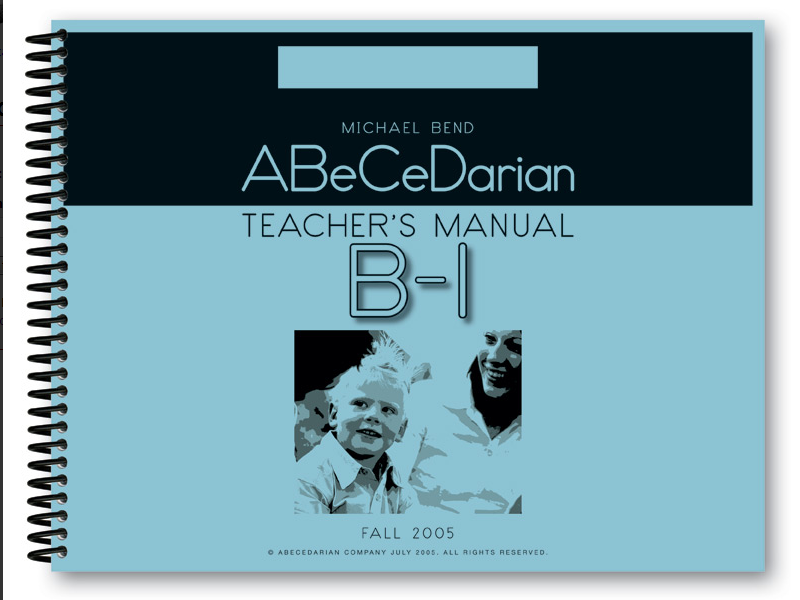
Mayda had the opportunity to review ABeCeDarian Co.'s Student Workbook B1  This book is 24 lessons broken into 12 units. My biggest worry with her was that she is a sight reader. She glances at a word and knows what it is without reading it. She completely skipped the sounding-out-to-blending stage. She had memorized by sight SO many words that she seemed a great reader. But I know a time will come she will hit words she hadn't seen before, and be at a loss to know how to break them down. 

We loved this workbook because it makes her work with the sounds individually. The exercises where she sorts words into lists are really important. She is learning that several letter combinations can make the same sound, and is really slowing down to focus on them. 

Some other exercises had her focus on word lists where only one sound changes from one word to the next. This was actually really hard for her to identify, because of the way she had been reading. It is really breaking through the "code" that reading really is, helping her slow down and really put some muscle on her reading skills.  

Mayda read all of the storybooks, and loved them. Her excitement was really encouraging to Wyatt who is beginning to read the same books. She is also doing the workbook at the same pace of two lessons per week, breaking each lesson over two days. Although 6 pages in one sitting was not too much for her, the only thing she didn't like was that this was "work" compared to how she had been reading. I'm happy about this; she needed a challenge! Even though she tells me she doesn't like it, she chooses this subject to start with every day.  

Each day she pushed farther in the book than I asked her to do, and by the end of the review period we had picked up our pace to a lesson or more per day. I think initially we had moved more slowly through both books because I was struggling to absorb all the teaching materials. But as we used it more, the lessons became routines, and the kids became excited with the progress they were seeing.

Math
At one of the local school closings, I had been really thankful to snag a copy of Addison Wesley Mathematics (Gr 1) for Mayda. We really liked the consumable workbook style and it put her well into the next level in Math skills. I'd use it again if I could find an affordable copy.


Mayda also had the chance to try out a copy of Math Rider (a computer math game) during a TOS review. It was a huge help to her basic math computation skills. She increased in her addition proficiency by 49% and her subtraction proficiency by 28%. 
Math Rider is a fun game that can easily help kids memorize their math facts quickly. It is easy to use, adapts to their needs, and rewards kids for mastering a function. There are magical elements to the story-line I don't appreciate, but the kids and I talked about those things and moved on, since the were only just part of the story, and not part of the game-play. I think all of my kids benefited from trying out Math Rider. Even I benefited from trying it out, having facts I knew, now on "rapid recall."


Science
Mayda and Wyatt worked through this Science book together. My Father's World from Christian Liberty Press uses the days of creation as a chapter framework as they study creation as a whole. The activities are simple and there are questions to review at the end of each chapter. This one goes well with taking regular nature walks.


Geography:
For Geography we used Continents and Oceans from Evan-Moor. It is the perfect introduction to basic Earth geography. This is an important subject for my kids and I love this book as a way to lead in.

From the description:
Volume 3 of Beginning Geography contains materials and projects to help children become familiar with the continents and major bodies of water on Earth. They are introduced to some facts about each continent, such as major mountain ranges, rivers, and indigenous animal species. Other exercises include naming the oceans and continents, and directions on a compass rose. There are reproducible animal, continent, and question cards for use in learning games such as Continent Concentration, Match Up, and Bean Bag Toss. Also features two-sided, full-color pull-out poster that has a map of the world on one side and a "Where in the world do they live?" animal quiz on the other side.
You get reproducible activity sheets, teacher resource pages, and cards. Complete step-by-step instructions for each project. All 16 pages perforated for easy removal. 

 Art:
Mayda really enjoyed playing Go Fish with the Impressionist Artist cards from Birdcage Press. She very quickly memorized the names of 36 art pieces and picked out her favorites too. It was a fun way to get her interested in Art.

We also had a wonderful visit to the Nelson-Atkins Museum of Art in Kansas City. We are currently reviewing a new book, Global Art, for the crew (review out soon!), and she has been enjoying doing a number of projects with it. 

Bible:
Sometimes the disciples are the teachers, and this year I had a day like that with Mayda as we studied through our Bible curriculum, Studying God's Word "B" from Christian Liberty Press.

Here's an excerpt from my recent post about that. (please click through to read the whole story)

Two weeks ago. There was so much to do. It was a busy week, and it was my turn to cook for the Awana crowd. Tuesday's school lessons were a blur, but Mayda was motivated by something or other to get caught up. She was behind in Bible. Yes, the Bible curriculum that I had said I wasn't going to use; she really likes it. After failing to click with her two older siblings, this one clicks with her. The lesson that day was about sin. Not sin you commit, but the sin of omission. Knowing to do something and not doing it. I wanted to hurry through it, but she had figured out how to listen to the Bible readings on the smart phone... so she looked them up, and we read Matthew 25:31-46. We talked about what it means to serve Christ through serving others, and how a heart obedient to Him will follow His leading. Mayda pondered that for a bit and she said, "I want to bake some bread."
. . . Mayda and I went on through to the kitchen where the woman was sitting, and she was completely taken by surprise. I told her how Mayda had wanted to bake her bread. She turned to her grandson and then back to me, and gesturing to the crust of bread on the counter, said:
"I just told him this morning that I was going to need to order more bread!"
We exclaimed together that God had heard, and placed an order with Mayda, who was beaming now (but hiding behind me out of shyness). She wanted to pay her, but Mayda told her it was a gift. I couldn't have been more proud of my girl.
And in my heart I was humbled. How many times have I had the thought to minister to someone: to drop someone a note, or to give a quick call? Did I do it?
I have been given a mission field, and it is here. And I have so far to go, in teaching them... and I will begin with the lesson of listening. Listening to that still small voice that prompts us to love, and to be the love of Christ. In our home. In our community. In our world.
Even if that lesson came from a child, a good humbling, and a a few loaves of bread.
~~~~~

AWANA stands for Approved Workmen Are Not Ashamed, taken from 2 Timothy 2:15:

"Be diligent to present yourself approved to God, a worker who does not need to be ashamed, rightly dividing the word of truth."

The best part of the Awana format is that it teaches Biblical truths with Scripture memorization to back it up. I want my kids to know what they believe, and the Biblical basis for "WHY?" as well.

I am really proud of Mayda as she finished her 2nd Sparks book with enough time to go through it completely again for a review. Of all the Sparks, only a handful did this. It was awesome.


Overall Mayda had a great year and is looking forward to the 2nd grade this fall. 

Blessings, 
Laura

Linked:

©2012-2013 Loving and Learning on the High Plains. All rights reserved. All text, photographs, artwork, and other content may not be reproduced or transmitted in any form without the written consent of the author. http://www.homeschoolhighplains.blogspot.com

Friday, July 12, 2013

School-Year in Review: 5th grade

*Affiliate links may be included in some posts, see my Disclosure tab above. *

Tyler was a 5th grader during the 2012-2013 school year. It was a great year for him and we used a variety of materials. We used some books we already owned, and then during the second semester we used several provided by the TOS Review Crew. He finished all of his work right around the 1st of May (started on Labor Day), and I couldn't be more pleased. This summer he has been doing a few review products for the Crew, but otherwise just enjoying the local library reading program. :) Click any image to view it on Amazon!

Here's my review of the 
books we used this year:

Grammar
We have always liked the Spectrum Grammar books, and we liked  Spectrum Grammar, Level 5 as well. It is laid out in a manner that is easy to accomplish in a year's time (176 pages). My son does not like to write a lot, but we enjoyed this book without any tears.  The final section of the book covers a painless approach to writing a research paper. I'd buy it again, and in fact, I likely will for Emma this fall. At $8.96, I couldn't beat it. 


Spelling
Steck-Vaughn Spelling 5 was one I received when a school was closing, and was cleaning out books. It was straight-forward enough focusing on both vocabulary and spelling. The lessons are broken into three parts: a story where the student fills in the missing words of the story using the spelling list, a vocabulary page where they practice dictionary skills, and a page where they analyze the special spelling rules that apply to each word. We liked the spelling structure pages, and the story pages, but he dictionary skills pages were strange and awkward. We ended up skipping them. Overall, I was not impressed with the progress Tyler made in this subject. There was no drilling or testing provided in the book (unlike others we've used), and he didn't retain much. We will be shopping for a new spelling curriculum next year.

Math
I've always loved Saxon Math (with the exception of grades K-3rd), and even used it when I was a homeschooled student. I felt it did a great job getting me ready to take college math, and I didn't have to take a make up class like most of the freshmen there. Saxon Math 65 is about $65, so it's a bit of an investment, but the textbook can be used again and again. You can even find used copies. It is intended for re-use and the answers are to be written in a notebook. We also used the teachers manual and tests. We were able to do one Lesson per day to complete the 140 lessons in our school year. Each lesson has 25 questions, some with the newest concept and some looking back over previous lessons. With this constant state of review, it all stays pretty fresh. The tests are pretty easy to add in as well. Tyler will be using Saxon Math 76 this fall.


Science

For the first part of the year Tyler and Emma shared A'Beka Books Investigating God's World. I've always like the A'Beka Sciences. The chapters are easily read and there are regular question boxes to answer together. The illustrations are colorful and interesting as well. Tyler also briefly used Rod and Staff's science, but it was a 1975 edition, and really wasn't what I was looking for.

Early in the Crew year we were offered Apologia's Zoology 2 to review and I jumped at the chance. We received it in January and really enjoyed it. Here's my summary of that review:

  • It knocks it out of the ballpark when it comes to retaining the information, especially if you invest in using the notebooking journal.
  • It was fun and easy to do the experiments with everyday household supplies.
  • My kids were excited to do it every day. 
  • It covers the subject material completely and deeply.
  • The lesson schedule in the front of the notebooking journal, the planning was done for me.
  • With all that depth, I did not feel it explored the broad range of the sciences in a very clear way, or in a way that identified the different scientific arenas. This is important to me for the upper grades as they prepare for high school. 

Health:

Tyler played baseball for PE this year, and it was a blast! We also used the A'Beka health curriculum: Choosing Good Health.  I appreciated the Christian perspective of this book and the price was right too: I borrowed it from our local homeschool library. It covered sensitive topics in a healthy and respectful way, and I strongly encourage you to check this one out.


Geography:
 photo Geography1-CompleteSet_zps84b09173.pngWe had the pleasure of reviewing Memoria Press' Geography I late in the year. We finished up the Middle East and will cover the rest of the book this fall. 


Geography I: Middle East, North Africa, and Europe Student Text (103 pages), is a student text for daily reading. It begins with a page of teaching guidelines, which recommend covering 2-3 countries per week. This book goes well with the Geography I: Middle East, North Africa, and Europe Student Workbook (90 pages). As they read the one page in the text on each country, they can test their knowledge by filling in the blanks in the workbook.  If you have more than one student, you can share the text and purchase extras of the consumable workbook. I think they are very reasonably priced for this!


History:
 This year both Emma and Tyler shared A'Beka Old World History and Geography. It was a great overview of world history, and while the book we has was a bit dated, it covered the different regions thoroughly and had plenty of review by way of question boxes. It has plenty of maps and even encouraged the kids to memorize many historical works. You can hear them reciting our National Creed here

We supplemented it with the History curriculum we were reviewing with the Crew, including Homeschool in the Woods: Great Empires, a unit study. There are 14 empires covered by the Activity Study, and we chose to work on these seven for the review period:

Russian Empire
Chinese Empire
English Empire
Egyptian Empire
Viking Empire
Roman Empire
and the Greek Empire

For each empire we studied, we had a map with important cities and boundaries marked, a blank map to fill in, a project sheet giving instructions and links, several craft template masters, and a recipe sheet with two recipes unique to that region. We also had a text portion to read aloud while working on the projects.

Art:
For the first part of the year, we focused on reading through the Usborne Children's Book of Art, in preparation for our trip to the Denver Art Museum's "Becoming Van Gogh" Exhibit. As a world exclusive exhibit, it was an awesome thing to have an opportunity to see. Given the long lines and the crowds we encountered, I'm amazed we got in at all. I'm so thankful for my friend arranging it! Tyler loved the Van Gogh painting Sunflowers, and even made a sketch of it for me. Considering how much Tyler struggles with artistic pursuits, I was seriously impressed. 

The second semester we used the book from the Crew, ARTistic PursuitsElementary 4-5th grade, Book One: The Elements of Art and Composition by Brenda Ellis. We went though the first four units: Space, Line, Texture, and Value. With each one the kids enjoyed reading the lesson together with me, and working on the specific assignments. This week we took our various sketches and visited my grandma, and the kids told her all about what they had been studying. She, being an avid painter, looked over their work with a careful eye. then she turned to me and asked if I'm going to keep using this curriculum after the review. "I hope you do," she said. I was so excited that she liked what we had done so far. We do plan to keep going with it this fall.

Bible:
AWANA stands for Approved Workmen Are Not Ashamed, taken from 2 Timothy 2:15:

"Be diligent to present yourself approved to God, a worker who does not need to be ashamed, rightly dividing the word of truth."

I want my kids to have a good base knowledge of Bible application in every day life... this is why I LOVE AWANA! Having two kids in the Truth & Training program, one in Sparks, and one in Cubbies... I get to memorize a LOT of Scripture with them.

The best part of the Awana format is that it teaches Biblical truths with Scripture memorization to back it up.  In Cubbies they do it with a story and a simple verse to go along with it. Since this is geared for ages 3-4, it's pretty simple. In Sparks (K-2nd grade) they memorize a verse that backs up a Biblical statement. I want my kids to know what they believe, and the Biblical basis for "WHY?" as well.


Overall it was a great year for Tyler, and his summer has been filled with learning as well. He is now preparing for the 4H fair, where he will show chickens and a few photography projects. Homeschooling is a lifestyle for us, not a time of just bookwork, but of enjoying the adventure of learning together. Next Friday I hope to share Emma's school year review. You may find  it is very similar to Tyler's considering they share several subjects. 

Blessings, 
Laura

Linked:


©2012-2013 Loving and Learning on the High Plains. All rights reserved. All text, photographs, artwork, and other content may not be reproduced or transmitted in any form without the written consent of the author. http://www.homeschoolhighplains.blogspot.com

LinkWithin

Related Posts Plugin for WordPress, Blogger...